Understanding Dehumidifier Capacity and Coverage Area
Dehumidifier capacity is rated in pints of water removed per day under standard conditions. The AHAM (Association of Home Appliance Manufacturers) defines standard conditions as 65°F and 60% relative humidity — conditions that are less demanding than a damp basement or humid summer apartment. Real-world removal rates are often lower than rated capacity.
Capacity guidelines for apartments: for spaces up to 300 sq ft with mild humidity issues (windows sometimes fog, air feels slightly damp), a small 20–25 oz tank unit is typically sufficient. For medium spaces of 500–1,000 sq ft with moderate humidity (visible condensation, musty odors), look for 20–35 pint per day capacity. For persistently damp apartments or spaces up to 1,500 sq ft, 45–50 pint models provide reliable continuous control.
Manufacturer coverage area claims are often optimistic. If your apartment has persistent mold problems or experiences high outdoor humidity during summer, size up by one category. An undersized dehumidifier that runs continuously will wear out sooner and never achieve your target humidity level.
Key Features to Evaluate Before Buying
Tank capacity and continuous drain: Small dehumidifiers have built-in water tanks ranging from 20 oz to 100+ oz. In humid conditions a small tank fills within hours and must be manually emptied daily or more frequently. Models with a continuous drain port allow a hose to route water directly to a floor drain or bucket, enabling unattended operation. For any dehumidifier you plan to run overnight or while away from home, continuous drain capability is strongly recommended.
Built-in humidistat: A humidistat lets you set a target relative humidity (such as 45%). The dehumidifier cycles on and off to maintain that level rather than running continuously. Without a humidistat, units run at full power regardless of ambient humidity, which wastes energy and can over-dry small spaces.
Noise level: Compressor-based dehumidifiers generate noise from both the compressor and the fan. Models rated under 45 dB are suitable for bedroom use. Thermoelectric (Peltier) dehumidifiers operate silently but have very low capacity — they are effective only for closets and very small spaces under high humidity conditions.
Energy Star certification: Dehumidifiers can run for many hours per day during humid seasons. Energy Star certified models use at least 15% less energy than standard models, translating to meaningful electricity cost savings over a summer of continuous operation.
Compact Units vs. Full-Capacity Models
Compact thermoelectric dehumidifiers (typically 16–35 oz capacity) are the right choice for very targeted applications: a single bathroom, a closet susceptible to mildew, or a small bedroom with mild humidity. They operate silently, cost less than $50, and require no complicated setup. Their limitation is capacity — they cannot meaningfully reduce humidity in an open apartment space.
Compressor-based compact dehumidifiers (20–30 pint range) bridge the gap for studios and one-bedroom apartments. They handle moderate humidity problems in spaces up to 800 sq ft, produce some operational noise, and require daily tank emptying unless configured with a continuous drain.
Full-capacity compressor models (45–80 pint range) are sized for persistent moisture problems across larger apartments, ground-floor units with concrete slab construction, and basements. They are bulkier, louder, and more expensive, but provide the water removal capacity to genuinely control serious humidity issues. These models almost always include continuous drain capability and should be the choice for any apartment with visible mold or condensation on walls.
Our Recommendations
Best Dehumidifiers for Apartments
Our ranked selection of compact, mid-size, and Energy Star dehumidifiers suited for apartments, studios, and small rooms.
Best Humidity & Temperature Monitors
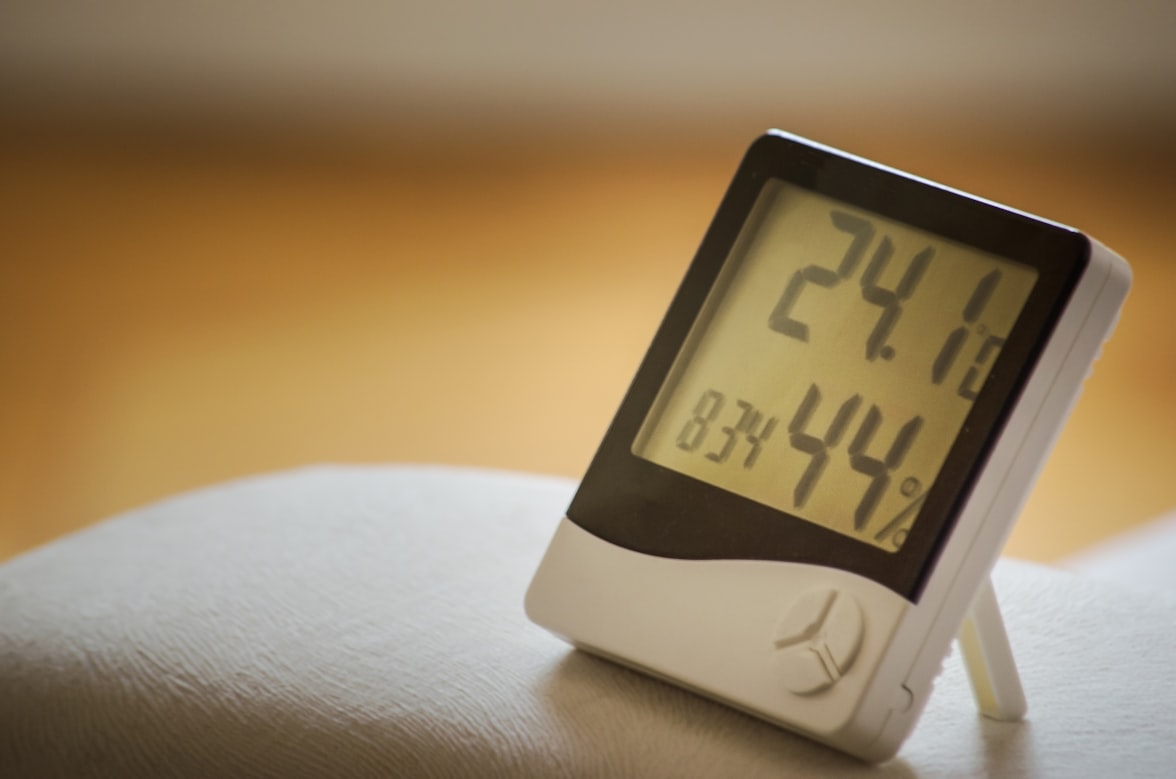
Pair your dehumidifier with a hygrometer to monitor relative humidity and confirm your unit is maintaining the target range.