Window Air Conditioners: Efficiency, Installation, and Limits
Window air conditioners mount directly into a double-hung or sliding window and vent heat outside through the back of the unit. This sealed installation means the unit processes indoor air and exhausts heat efficiently — no hot-air leakage back into the room. A properly installed 5,000 BTU window unit can cool a 150 sq ft room to 20–25°F below outdoor temperature in an hour.
Efficiency: Window ACs are significantly more efficient than equivalent portable units. The EER (Energy Efficiency Ratio) of most window ACs ranges from 10–12, compared to 8–10 for portable ACs at equivalent BTU output. This means window units cool the same space for 15–30% less electricity cost over a season.
Installation: Most window ACs come with an accordion-style side panel and a sash lock bracket. Installation takes 15–30 minutes and is reversible — no permanent modifications are required. However, installation does require placing the unit in the window frame, which some landlords prohibit or require prior approval for. Safety brackets are required to prevent the unit from falling, particularly in upper-floor apartments.
Limitations: Window ACs require a compatible window — most are designed for double-hung windows. Casement windows (side-hinged) require specialty models. Fixed windows cannot accommodate window ACs. Units also block the window entirely, which may matter if the window provides significant natural light or ventilation when not in use.
Portable Air Conditioners: Flexibility, Drawbacks, and Best Uses
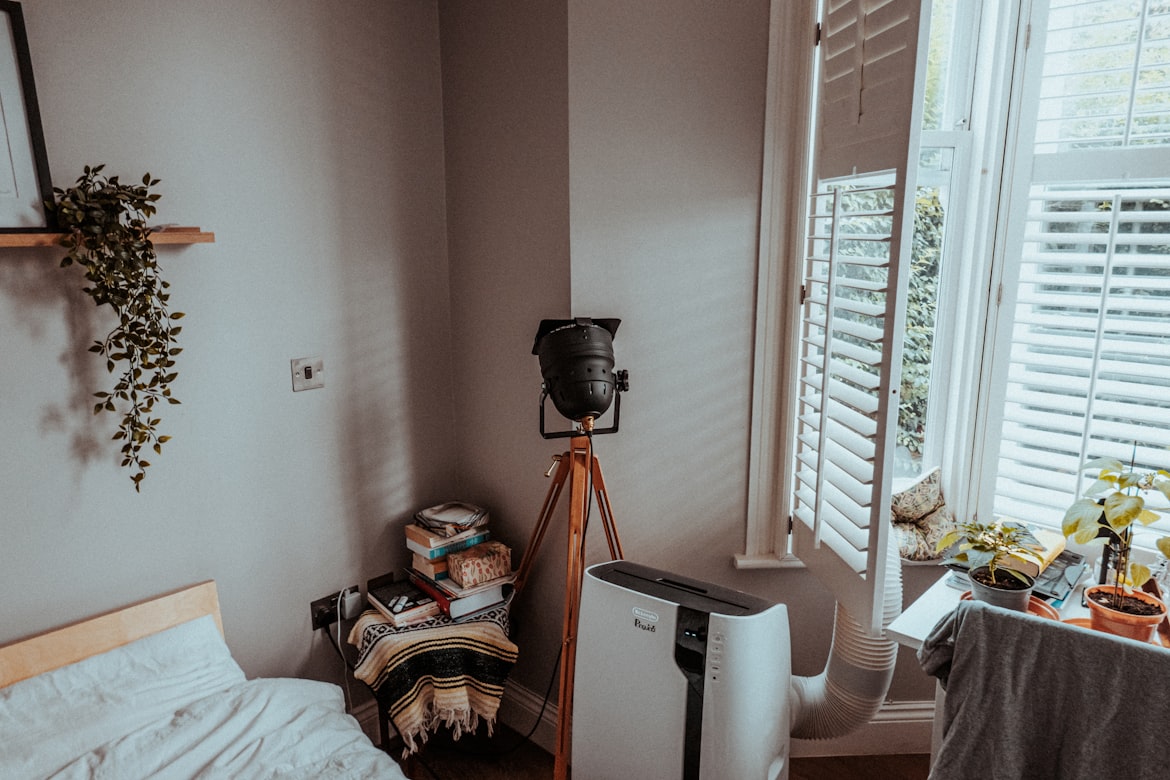
Portable air conditioners sit on the floor inside the room and vent hot air through an exhaust hose inserted into a partially-open window. They require no permanent installation — just routing the hose to any available window opening — making them the go-to choice for renters whose leases prohibit window unit installation.
Efficiency drawbacks: Single-hose portable ACs — the most common type — draw replacement air from the room itself to exhaust hot air outside. This negative pressure causes warm outside air to leak back in through gaps in doors, windows, and walls. The result is that single-hose portables effectively fight themselves: they cool the air, then pull in warm replacement air, reducing net cooling efficiency significantly. Department of Energy standards now require portable ACs to carry SACC (Seasonally Adjusted Cooling Capacity) ratings that reflect real-world efficiency — these numbers are typically 30–40% lower than the BTU rating on the box.
Dual-hose models address this by drawing outside air through one hose for combustion and exhausting through a second, maintaining room pressure balance. They are more efficient than single-hose models but still lag behind window units.
Noise: Portable ACs house the entire compressor unit inside the room, making them louder than window ACs at equivalent cooling capacity. Most operate at 50–60 dB, which is audible background noise in a quiet room.
How to Decide: A Practical Framework for Renters
Check your lease first. Before purchasing anything, review your lease agreement for language about window AC installation. Many leases require written landlord approval; some prohibit modifications entirely. If your lease is silent on the topic, request written permission before installing a window unit.
Window type matters: If your apartment has double-hung or sliding windows, a window AC is almost certainly the better choice on efficiency and cost grounds. If you have casement or fixed windows, a portable AC may be your only option.
Room size is the deciding factor if both are viable: For rooms under 150 sq ft (small bedrooms, studios), any 5,000 BTU window unit provides effective cooling. For 150–350 sq ft spaces, an 8,000–10,000 BTU window unit cools effectively; portable units at equivalent BTU ratings will underperform due to efficiency losses. For larger open-plan apartments, both options become expensive to run — evaluate whether whole-apartment central cooling or multiple units makes more sense.
If you move frequently, a portable AC travels with you without any reinstallation complications. If you plan to stay in the same apartment for multiple seasons, the efficiency difference of a window unit adds up meaningfully over time.
Our Recommendations
Best Air Conditioners for Apartments
Our ranked list of window units and portable ACs sized for apartments and small rooms — by BTU range, noise level, and installation ease.
Best Dehumidifiers for Apartments
In humid climates, pairing an AC with a dehumidifier provides better comfort than either alone — dehumidifiers target moisture while ACs handle temperature.